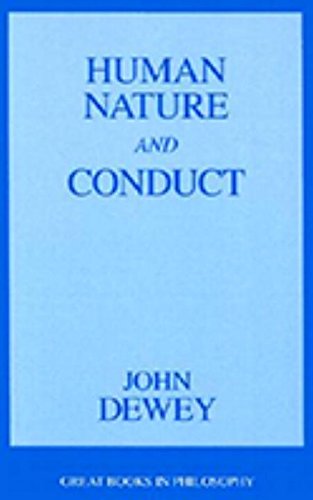


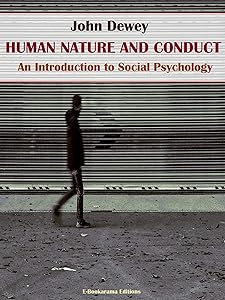
Human Nature and Conduct: An Introduction to Social Psychology (Great Books in Philosophy) by John Dewey

Human Nature and Conduct: An Introduction to Social Psychology (Great Books in Philosophy)

John Dewey
344 pages
Prometheus
Dec 2002
Paperback
Psychology & Philosophy WSBN
0
Readers
0
Reviews
0
Discussions
0
Quotes
This insightful treatise on the essential components of human nature by the great American philosopher and educator John Dewey, in his own words, "sets forth a belief that an understanding of habit and of different types of habit is the key to social psychology, while the operation of impulse and intelligence gives the key to individualized mental activity." Beginning with habits, Dewey discusses these basic patterns of conduct as essential mechanisms that allow individuals to coexist harmoniously within society and to adjust to the outer environment. The process of habit formation is a major part of childhood education as the growing individual learns the established modes of behavior in society.In the next section Dewey focuses on impulses, which motivate action and are regulated in response to the reactions of others and the learned habits that the society around us instills. Intelligence, the subject of the next part, in Dewey's view, is the chief instrument that allows human beings to act creatively and experimentally in response to the demands of both inner impulses and outer challenges. How we use our intelligence to deal with our impulses and habits reflects individual variations of character and largely determines life destinies.Intelligence is also the key to morality. If we use our intelligence to make moral judgments based on a clear understanding of empirical facts, then there is a far better chance, says Dewey, that our judgments will be good and our actions right, than if we blindly accept moral rules from traditional authorities or unthinkingly give way to natural instincts. Unless we use the tool of intelligence to understand the natural world around us and our own human nature, we cannot make wise value judgments to serve our best interests.Some eighty years after its original publication, Dewey's commonsensical approach, rooted in experience and objective observation, still has much to recommend it to students of ethics, psychology, and sociology.
Join the conversation

No discussions yet. Join BookLovers to start a discussion about this book!

No reviews yet. Join BookLovers to write the first review!

No quotes shared yet. Join BookLovers to share your favorite quotes!

Earn Points
Your voice matters. Every comment, review, and quote earns you reward points redeemable for Bitcoin.
Comment +5 pts Review +20 pts Quote +7 pts Upvote +1 pt
BookMatch Quiz
Find books similar to this one
About this book
Pages 344
Publisher Prometheus
Published 2002
Readers 0