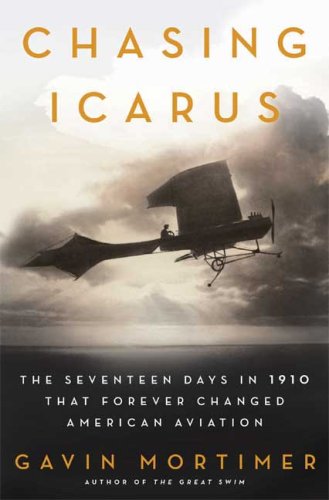
A dramatic chronicle of a pivotal moment in the history of aviation. By 1910—seven years after the Wright brothers first lifted a plane off the ground at Kitty Hawk—America and the world were transfixed by the danger and challenge of mastering the air. Yet which form of flight would predominate was far from clear—dirigibles, balloons, and airplanes all had their passionate advocates. Emblematic of this uncertainty, the precursor of the U .S. Air Force owned one plane and two dirigibles. During the seventeen days in October 1910 that Gavin Mortimer vividly recounts in Chasing Icarus, the question of primacy in the air was on full display, after which the future of aviation was never in doubt. The great dirigible America, captained by Walter Wellman, lifted off from New Jersey and for several turbulent days attempted to be the first flying machine to cross the Atlantic.