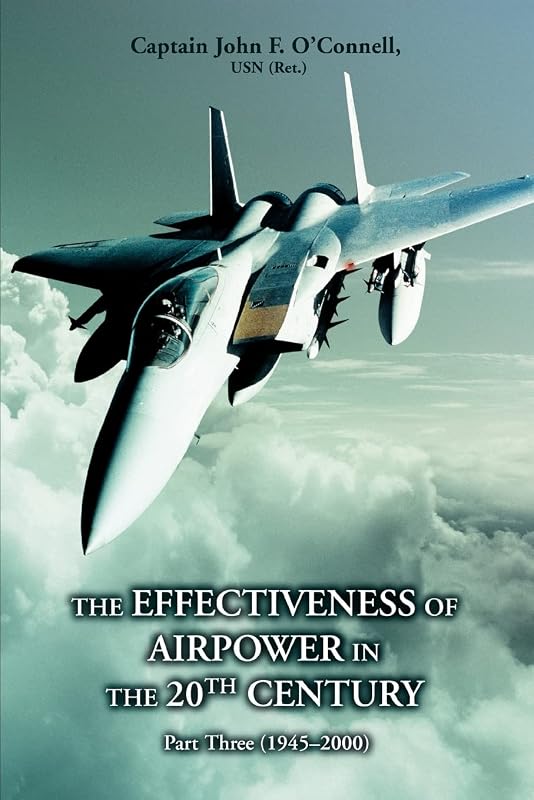
The Effectiveness of Airpower in the 20th Century: Part Three (1945 - 2000) by John F O'Connell Cap Cap

The Effectiveness of Airpower in the 20th Century: Part Three (1945 - 2000)

John F O'Connell Cap Cap
208 pages
iUniverse
Aug 2006
Paperback
History WSBN
0
Readers
0
Reviews
0
Discussions
0
Quotes
The book reviews the actual effectiveness of military air power in accomplishing desired military and political goals in a number of conflicts following WWII. During the Korean War and the Vietnam War, U.S. air power attempted a re-run of WWII aerial activities. However, in both conflicts, poltical constraints prevented the United States from achieving its desired political results, although the 1972 B-52 strategic bombing campaign against Hanoi worked to bring the North Vietnamese back to the negotiating table. The Falklands/Malvinas War pitted the UK against Argentina in a remote corner of the South Atlantic. Air power allowed a U.K victory, barely. The USSR held air supremacy over Afghanistan but was unable to subdue tough Afghan guerrillas, and was finally forced to withdraw after Stinger missiles were introduced. The Gulf War demonstrated the increasing effectiveness of precision aerial weaponry. The conflict in Kosovo finally produced a result long sought by air power enthusiasts - an end to fighting brought about by air attack alone.
Join the conversation

No discussions yet. Join BookLovers to start a discussion about this book!

No reviews yet. Join BookLovers to write the first review!

No quotes shared yet. Join BookLovers to share your favorite quotes!

Earn Points
Your voice matters. Every comment, review, and quote earns you reward points redeemable for Bitcoin.
Comment +5 pts Review +20 pts Quote +7 pts Upvote +1 pt
BookMatch Quiz
Find books similar to this one
About this book
Pages 208
Publisher iUniverse
Published 2006
Readers 0