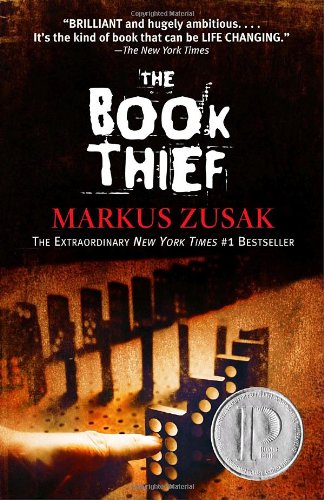
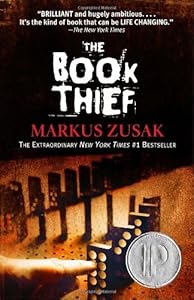
The extraordinary #1 New York Times bestseller that is now a major motion picture, Markus Zusak's unforgettable story is about the ability of books to feed the soul.It is 1939. Nazi Germany. The country is holding its breath. Death has never been busier, and will become busier still. Liesel Meminger is a foster girl living outside of Munich, who scratches out a meager existence for herself by stealing when she encounters something she can’t resist–books. With the help of her accordion-playing foster father, she learns to read and shares her stolen books with her neighbors during bombing raids as well as with the Jewish man hidden in her basement. In superbly crafted writing that burns with intensity, award-winning author Markus Zusak, author of I Am the Messenger, has given us one of the most enduring stories of our time.
No discussions yet. Join BookLovers to start a discussion about this book!
A beautiful piece of work you need to read
The ‘Book Thief’ is set in Germany during World War 2 where being a Nazi was displayed in every street. The book focuses on the main character Liesel Meminger who has just lost her brother while on the way to being given away to a foster family in the town Molching with Rosa and Hans Hubermann. Once Liesel settles into her foster family she explores her town and meets other people including her best friend Rudy Steiner which then leads to her exploring her interest in books which “coincidentally” connects to the book title. Liesels life gets a big obstacle when Max Vadenburg, who is a Jewish man, comes into Liesel's home and he has to hide in her basement while the family is already being suspected of being against Nazi views. The Book Thief explores challenges Liesel has to face and tragedies that occur due to living under Nazi rule. Overall there wasn’t anything I disliked about this book and I think a huge part of it was because of how much I liked the scenes given to us along with the characters. For example, the book-burning scene is strong as we see the people's ability to learn the truth being taken away. At the same time, we also see Liesel being rebellious when she steals a book from the ashes, marking a quiet rebellion against the Nazis. Then we have heartwarming scenes in the book like when Hans Hubermann teaches Liesel how to read. Then we are given the friendship of Liesel and Max who is the Jewish man in her basement, they have a touching relationship as Liesel treats him kindly and their connection grows stronger when he gives her a hand-drawn book. Since this book brings both dark, strong, and heartwarming scenes you can’t complain about not getting one of them. I feel like this is done because the book is narrated by Death, Death doesn’t focus on the negative, it's only made to tell Liesel's story. The characters in the book are characters you wouldn’t forget because they each have their traits. Liesel who is the main character stands out the mos...
A snowball in the face is surely the perfect beginning to a lasting friendship.
The consequence of this is that I'm always finding humans at their best and worst. I see their ugly and their beauty, and I wonder how the same thing can be both. (Death)
People observe the colors of a day only at its beginnings and ends, but to me it's quite clear that a day merges through a multitude of shades and intonations with each passing moment. A single hour can consist of thousands of different colors. Waxy yellows, cloud-spot blues. Murky darkness. In my line of work, I make it a point to notice them.
guess humans like to watch a little destruction. Sand castles, houses of cards, that's where they begin. Their great skills is their capacity to escalate.
Earn Points
Your voice matters. Every comment, review, and quote earns you reward points redeemable for Bitcoin.