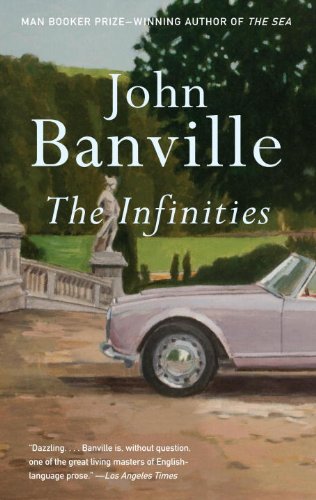
On a languid midsummer’s day in the countryside, old Adam Godley, a renowned theoretical mathematician, is dying. His family gathers at his bedside: his son, young Adam, struggling to maintain his marriage to a radiantly beautiful actress; his nineteen-year-old daughter, Petra, filled with voices and visions as she waits for the inevitable; their mother, Ursula, whose relations with the Godley children are strained at best; and Petra’s “young man”—very likely more interested in the father than the daughter—who has arrived for a superbly ill-timed visit.But the Godley family is not alone in their vigil. Around them hovers a family of mischievous immortals—among them, Zeus, who has his eye on young Adam’s wife; Pan, who has taken the doughy, perspiring form of an old unwelcome acquaintance; and Hermes, who is the genial and omniscient narrator: “We too are petty and vindictive,” he tells us, “just like you, when we are put to it.