John Stuart Mill
John Stuart Mill (1806–1873) was an English philosopher, political economist, and civil servant, widely regarded as one of the most influential thinkers of the nineteenth century.[1][2] He advanced utilitarianism, liberalism, and empiricism through key works like *On Liberty*, *Utilitarianism*, and *A System of Logic*, advocating for individual liberty against state control and social reform including women's rights.[2][3][4]
Philosophy
Political Economy
Ethics
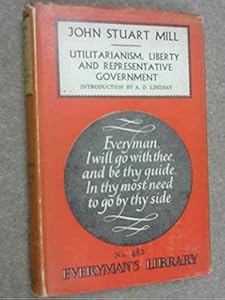
Utilitarianism on Liberty and Representative Government
Utilitarianism
Considerations on Representative Government
A System of Logic: Ratiocinative and Inductive 7th Edition, Vol. I
J. S. Mill: 'On Liberty' and Other Writings (Cambridge Texts in the History of Political Thought)
On Liberty (HPC Classics Series)
On Liberty and Other Essays (Oxford World's Classics)
Principles of Political Economy: and Chapters on Socialism (Oxford World's Classics)
The Basic Writings of John Stuart Mill: On Liberty, the Subjection of Women and Utilitarianism (Modern Library Classics)
Principles of Political Economy (Illustrated): Classic Edition
Mill: The Spirit of the Age, On Liberty, The Subjection of Women (Norton Critical Editions)
Principles of Political Economy
Principles of Political Economy
Principles of Political Economy
Principles of Political Economy: and Chapters on Socialism (Oxford World's Classics)
On Liberty
Essays on Economics and Society (Collected Works of John Stuart Mill, Volumes 4-5)
On Liberty

Collected Works of John Stuart Mill: Public and Parliamentary Speeches
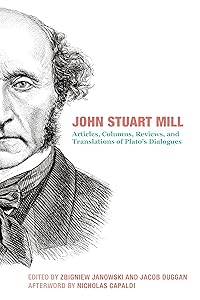
John Stuart Mill: Articles, Columns, Reviews and Translations of Plato's Dialogues
Great Ideas V On Liberty (Penguin Great Ideas)
Professor Sedgwick's Discourse On The Studies Of The University Of Cambridge
An Examination of Sir William Hamilton's Philosophy; Volume II

On Liberty: A philosophical essay by John Stuart Mill