Bertrand Russell
Bertrand Russell (1872-1970) was a British philosopher, logician, mathematician, and social reformer, renowned as a founder of analytic philosophy alongside figures like G.E. Moore and Ludwig Wittgenstein, and co-author with Alfred North Whitehead of the landmark *Principia Mathematica*. He was a prominent pacifist, imprisoned during World War I for his anti-war activism, and later campaigned against nuclear weapons, including authoring the Russell-Einstein Manifesto. Awarded the Nobel Prize in Literature in 1950 for his writings championing humanitarian ideals and freedom of thought, Russell authored over 70 books on diverse topics from mathematics to politics.[1][2][3][6]
Philosophy
Mathematics
Logic
Social Criticism
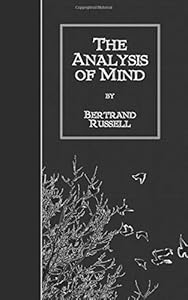
The Analysis of Mind
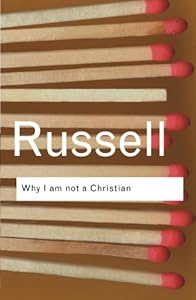
Why I am not a Christian: and Other Essays on Religion and Related Subjects
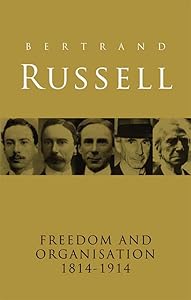
Freedom and Organisation, 1814-1914
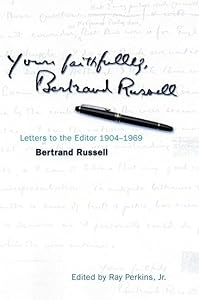
Yours Faithfully, Bertrand Russell: Letters to the Editor 1904-1969
A History of Western Philosophy
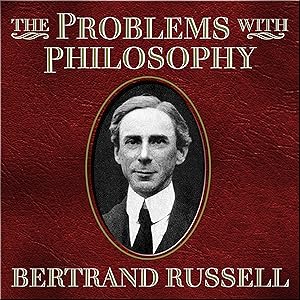
The Problems of Philosophy
The Problems of Philosophy
Why I Am Not a Christian and Other Essays on Religion and Related Subjects
The Problems of Philosophy
The Principles of Mathematics
An Essay on the Foundations of Geometry: Bertrand Russell's Philosophical Inquiry
The Scientific Outlook (Routledge Classics)
Philosophical Essays (Routledge Classics)
Mortals and Others (Routledge Classics)
In Praise of Idleness: And Other Essays (Routledge Classics)
Common Sense and Nuclear Warfare (Routledge Classics)
The Analysis of Mind - Classic Illustrated Edition
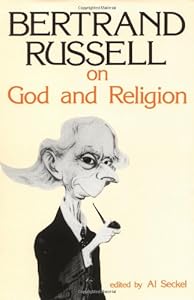
Bertrand Russell on God and Religion (Great Books in Philosophy)
The Collected Papers of Bertrand Russell, Vol. 1: Cambridge Essays, 1888-99
A History of Western Philosophy
Why Men Fight (Routledge Classics): Why Men Fight (Routledge Classics)
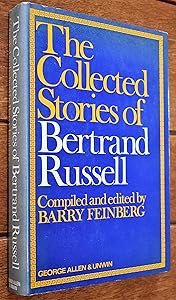
The collected stories of Bertrand Russell
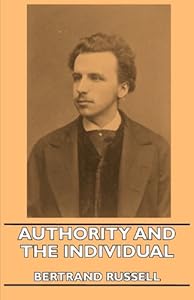
Authority and the Individual
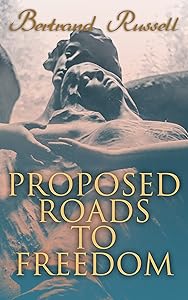
Proposed Roads to Freedom: Socialism, Anarchism & Syndicalism