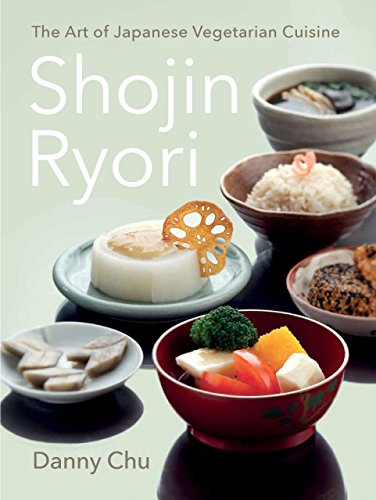
Shojin Ryori: The Art of Japanese Vegetarian Cuisine by Danny Chu

Shojin Ryori: The Art of Japanese Vegetarian Cuisine

Danny Chu
167 pages
Marshall Cavendish Intl
Jan 1971
Cooking, Food & Wine WSBN
3
Readers
1
Reviews
0
Discussions
0
Quotes
Shojin ryori is the art of Japanese vegetarian cuisine that originated from the Japanese Zen temples, but is today widely popular all over the world for its healthful and well-balanced meals prepared without meat, fish, eggs or dairy products.<br><br>With clearly written step-by-step instructions and insightful cooking tips, chef Danny Chu of Enso Kitchen will show you how to transform simple, readily available ingredients into creative, flavourful and satisfying shojin ryori meals in your home kitchen
Join the conversation

No discussions yet. Join BookLovers to start a discussion about this book!

A brilliant introduction to Japanese vegetarian cooking

This cookbook is one I appreciate much more after a demonstration of shojin ryori than I would have before the class. Each meal consists of 5 dishes, rice and soup. Two meals are provided for each season. Seasonal desserts are provided as a final section. There are photos of the complete meal as well as the individual dishes to show the presentation element of the meal. The recipes are very well selected - most are flexible so that you can experiment with alternate vegetables or grains. They carefully introduce you to many basic techniques and sauces so that by working your way through the cookbook you can become a decent Japanese home cook. It even points out things you would learn by watching your Mother e.g. using the water from washing rice to boil vegetables. While you need access to Japanese ingredients, the recipes use items that are most easily found if you have any access to Asian ingredients. Occasionally this means lemon not yuzu but it is rare for the simplicity of ingredients to harm authenticity. While one needs no special tools to cook the dishes, you will likely soon want a suribachi, a sushi bamboo rolling mat, chawan mushi cups ... and a collection of small single serving dishes, bowls, plates, sauce cups ... The reason is that Japanese dishes are individual not combined onto a single plate or platter. The flavors do not spread into each other. But one can collect these as you find the recipes that you wish to repeat and vary - get what makes that recipe easy to make and serve. Example recipes: - Goma dofu (Sesame tofu) as kuzu based starter - Daikon rolls - Braised burdock and carrot - Cabbage rolls - Asparagus with walnut-miso dressing - Ganmodoki (tofu fritter) - Eggplant with goma dressing - Sweet potato with cucumber puree - Courgette wrap - Nagaimo mushroom croquettes - Hijiki teriyaki - Vegetable termpura - Nagaimo chanwan nushi - Lotus root dumpling - Yamatoimo nori rolls - Mochi balls - Watermelon jelly With detailed directions and a de...

No quotes shared yet. Join BookLovers to share your favorite quotes!

Earn Points
Your voice matters. Every comment, review, and quote earns you reward points redeemable for Bitcoin.
Comment +5 pts Review +20 pts Quote +7 pts Upvote +1 pt
BookMatch Quiz
Find books similar to this one
About this book
Pages 167
Publisher Marshall Cavendish I...
Published 1971
Readers 3