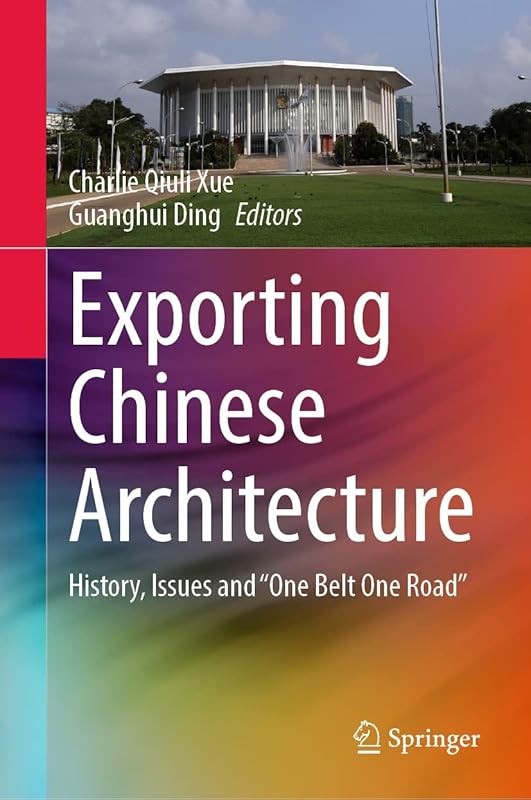
Exporting Chinese Architecture: History, Issues and “One Belt One Road” by Charlie Qiuli Xue

Exporting Chinese Architecture: History, Issues and “One Belt One Road”

Charlie Qiuli Xue
498 pages
Springer
Aug 2022
Hardcover
Arts & Photography WSBN
0
Readers
0
Reviews
0
Discussions
0
Quotes
This book studies the unexplored history of China-aided architecture erected in the developing world since the 1950s. By 2019, over 1,000 buildings had been delivered to more than 160 countries, including parliament houses, convention centers, stadiums, gymnasiums, theaters, schools, hospitals, libraries, railways, and stations. These projects, which have played a significant role in promoting economic transformation, cultural engagement and social and environmental well-being, have largely been overlooked or misunderstood by the international community. Why did China donate so many foreign-aid buildings? How were these buildings built in the remote land of developing countries with intricate influences and limited resources? Have they helped modernize the recipient countries? The authors of this book use a wide range of representative projects built in different historic periods and geographical locations as case studies to address the above questions from various perspectives. This book fills an enormous gap in modern architecture in China and the world. It offers architectural students and scholars in various disciplines the necessary knowledge on "diplomatic architecture"; informs architects the appropriate methods of cross-border design and low-tech building; teaches government officials the best practice of donating and receiving foreign-aid buildings; and enhances public awareness of cultural diversity in Asia, Africa, Oceania, and Latin America. With abundant first-hand materials, historical pictures, and drawings, the book is a must-read for those who are interested in modern architecture and developmental aid in the world.. . China's architecture abroad, notably in Africa and Asia, has been perceived with both fascination and anxiety. Based on a wealth of sources often difficult to access for scholars from outside China, this book links the history and present of China's architectural mobilities in ways that will stimulate new debates in architectural history and urban studies.. - Łukasz Stanek, Professor of Architectural History, The University of Manchester, UK.
Join the conversation

No discussions yet. Join BookLovers to start a discussion about this book!

No reviews yet. Join BookLovers to write the first review!

No quotes shared yet. Join BookLovers to share your favorite quotes!

Earn Points
Your voice matters. Every comment, review, and quote earns you reward points redeemable for Bitcoin.
Comment +5 pts Review +20 pts Quote +7 pts Upvote +1 pt
BookMatch Quiz
Find books similar to this one
About this book
Pages 498
Publisher Springer
Published 2022
Readers 0