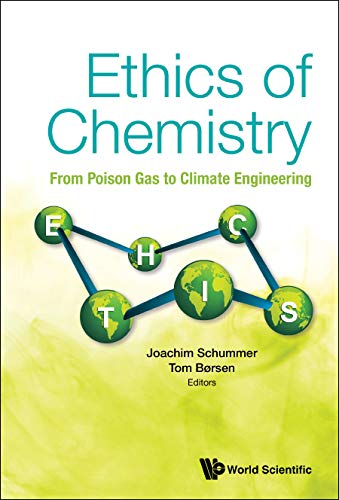
Ethics of Chemistry: From Poison Gas to Climate Engineering by Joachim Schummer

Ethics of Chemistry: From Poison Gas to Climate Engineering

Joachim Schummer
World Scientific Publishing Company
Feb 2021
Hardcover
Science WSBN
0
Readers
0
Reviews
0
Discussions
0
Quotes
"Overall, this collection of case studies provides an outstanding starting point for understanding the ethics of chemistry. It is an extremely important contribution to the study of chemical ethics ... Ethics of Chemistry is a key resource for educators interested in integrating ethics instruction into their chemistry curricula ... an important foundation for equipping students with the moral judgement and analytical skills necessary to contend with the ethical issues they are likely to face in their professional lives." -- Nature ChemistryAlthough chemistry has been the target of numerous public moral debates for over a century, there is still no academic field of ethics of chemistry to develop an ethically balanced view of the discipline. And while ethics courses are increasingly demanded for science and engineering students in many countries, chemistry is still lagging behind because of a lack of appropriate teaching material. This volume fills both gaps by establishing the scope of ethics of chemistry and providing a cased-based approach to teaching, thereby also narrating a cultural history of chemistry.From poison gas in WWI to climate engineering of the future, this volume covers the most important historical cases of chemistry. It draws lesson from major disasters of the past, such as in Bhopal and Love Canal, or from thalidomide, Agent Orange, and DDT. It further introduces to ethical arguments pro and con by discussing issues about bisphenol-A, polyvinyl chloride, and rare earth elements; as well as of contested chemical projects such as human enhancement, the creation of artificial life, and patents on human DNA. Moreover, it illustrates chemical engagements in preventing hazards, from the prediction of ozone depletion, to Green Chemistry, and research in recycling, industrial substance substitution, and clean-up. Students also learn about codes of conduct and chemical regulations.An international team of experts narrate the historical cases and analyse their ethical dimensions. All cases are suitable for undergraduate teaching, either in classes of ethics, history of chemistry, or in chemistry classes proper.Readership: Undergraduate students, graduate students in chemistry and chemistry lecturers.
Join the conversation

No discussions yet. Join BookLovers to start a discussion about this book!

No reviews yet. Join BookLovers to write the first review!

No quotes shared yet. Join BookLovers to share your favorite quotes!

Earn Points
Your voice matters. Every comment, review, and quote earns you reward points redeemable for Bitcoin.
Comment +5 pts Review +20 pts Quote +7 pts Upvote +1 pt
BookMatch Quiz
Find books similar to this one
About this book
Publisher World Scientific Pub...
Published 2021
Readers 0