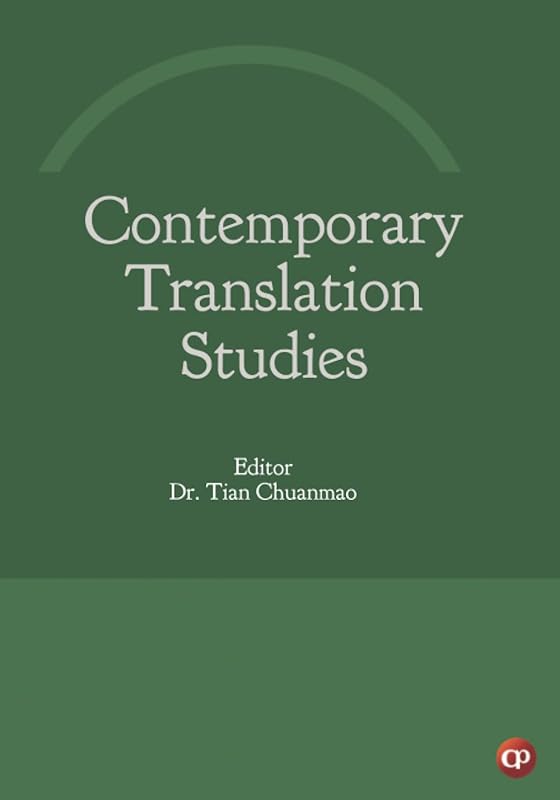
Contemporary Translation Studies by Dr. Tian Chuanmao Editor

Contemporary Translation Studies

Dr. Tian Chuanmao Editor
229 pages
CSMFL Publications
Nov 2021
Paperback
Reference WSBN
0
Readers
0
Reviews
0
Discussions
0
Quotes
Translation studies become even more relevant with the advent of cross border sharing of ideas related to general trade, culture, and human developmental activities. Contemporary translation studies cover works having considerable relevance and importance to the subject discipline.

This book is a compilation of peer-reviewed works having a special focus on the contemporary developments and advances in the translation studies.

In the chapter, 'Media Convergence, AVT and Translation Criticism in the Digital Era', Sare R. Öztürk discusses audio-visual translation (AVT) within the framework of digital culture and civic engagement and how it can be used as bottom-up new media resistance to top-down mass media production strategies.

In the chapter, 'Translating Multicultural Texts: Challenges and Solutions', Evgeniia V. Zimina claims that translating literary texts involves decoding not only the language but also the cultural elements integrated into the text. It needs to be ensured that the language translation doesn't distort the meaning of the cultural contexts and senses.

In the chapter, 'Bangla Translations of Latin American Poetry: A Critical Study', Ranita Chakraborty mapped the reception of Latin American Poetry within the corpus of the Bangla world of letters for three decades, from 1980 to 2010. It is explored as to how translators have been addressing the concern-areas while undertaking literary translations.

People management practices do apply to translators in the same way as they apply to any other professionals. Translators' management has evolved as a specialized managerial function in the translation domain. Pin Li and Chuanmao Tian in their chapter, 'Translator Management: A Case Study of the Ming-Dynasty's Ethnic House' have proposed the ways and means to manage the professionals doing translation- the translators.

In the chapter, 'A History of the Feminist Translation Movement in the 1980s' Turkey: The Case of 'Kadın Çevresi Publishing'', Erdem Akgun investigates the Feminist Translation Movement in the 1980s' Turkey with a special focus on the role of the translation and the translators alike.

Shubhangi Shrinivas Rao puts light on the multi-modal theory of the subject of translation. In the chapter, 'Multimodal Translation: Is Translation only Verbal?', it has been contended that an inclusive approach to the multimodality of the translation discipline will help refine our approach to the advancement of the subject of translation.

Training is a key factor for the development of any profession. Translators and interpreters need training as any other professional does. Mianjun Xu et al. in their chapter, 'Comparison of Interpreting Teachers' Use and Perceptions of Distance Interpreter Training (DIT) Before and After the COVID-19 Pandemic: An Interview-Based Study' have explored the role of distance interpreter training using online and blended approaches to train and equip interpreters.

This edited volume has tried to explore contemporary developments and trends in the translation studies. This book will be useful to the subject readers, interpreters, and those interested in the developmental studies in the translation discipline.

Read more Continue reading Read less
Join the conversation

No discussions yet. Join BookLovers to start a discussion about this book!

No reviews yet. Join BookLovers to write the first review!

No quotes shared yet. Join BookLovers to share your favorite quotes!

Earn Points
Your voice matters. Every comment, review, and quote earns you reward points redeemable for Bitcoin.
Comment +5 pts Review +20 pts Quote +7 pts Upvote +1 pt
BookMatch Quiz
Find books similar to this one
About this book
Pages 229
Publisher CSMFL Publications
Published 2021
Readers 0