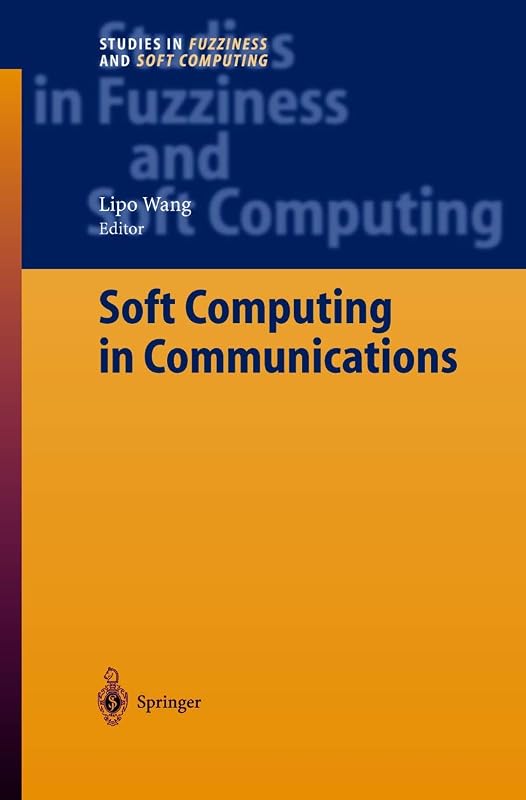
Soft Computing in Communications (Studies in Fuzziness and Soft Computing, 136) by Lipo Wang

Soft Computing in Communications (Studies in Fuzziness and Soft Computing, 136)

Lipo Wang
416 pages
Springer
Sep 2003
Hardcover
Computers & Internet WSBN
0
Readers
0
Reviews
0
Discussions
0
Quotes
Soft computing, as opposed to conventional "hard" computing, tolerates imprecision and uncertainty, in a way very much similar to the human mind. Soft computing techniques include neural networks, evolutionary computation, fuzzy logic, and chaos. The recent years have witnessed tremendous success of these powerful methods in virtually all areas of science and technology, as evidenced by the large numbers of research results published in a variety of journals, conferences, as weil as many excellent books in this book series on Studies in Fuzziness and Soft Computing. This volume is dedicated to recent novel applications of soft computing in communications. The book is organized in four Parts, i.e., (1) neural networks, (2) evolutionary computation, (3) fuzzy logic and neurofuzzy systems, and (4) kernel methods. Artificial neural networks consist of simple processing elements called neurons, which are connected by weights that may be adjusted during learning. Part 1 of the book has seven chapters, demonstrating some of the capabilities of two major types of neural networks, i.e., multiplayer perceptron (MLP) neural networks and Hopfield-type neural networks.
Join the conversation

No discussions yet. Join BookLovers to start a discussion about this book!

No reviews yet. Join BookLovers to write the first review!

No quotes shared yet. Join BookLovers to share your favorite quotes!

Earn Points
Your voice matters. Every comment, review, and quote earns you reward points redeemable for Bitcoin.
Comment +5 pts Review +20 pts Quote +7 pts Upvote +1 pt
BookMatch Quiz
Find books similar to this one
About this book
Pages 416
Publisher Springer
Published 2003
Readers 0