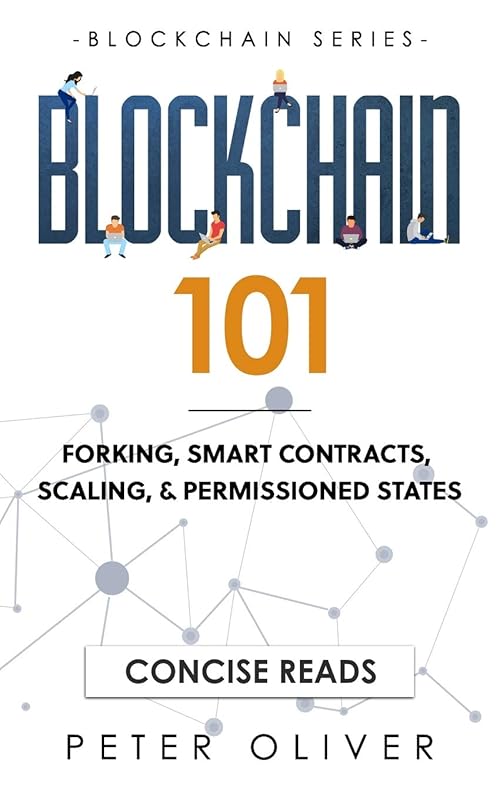

Blockchain 101: Forking, Smart Contracts, Scaling, & Permissioned States by Peter Oliver

Blockchain 101: Forking, Smart Contracts, Scaling, & Permissioned States

Peter Oliver
47 pages
Independently published
Feb 2018
Paperback
Computers & Internet WSBN
0
Readers
0
Reviews
0
Discussions
0
Quotes
*Blockchain for the non-developerBook 1: Blockchain 101: Distributed Ledger Technology (DLT) Book 2: Blockchain 101: Forking, Smart Contracts, Scaling, & Permissioned States. This Concise Reads series is set up in short 1-hour explanations of blockchain technology to educate the general public and students planning to make a career in this exciting new field. As it was in the early 2000s when students were foregoing careers in banking for careers in internet startups, today students are doubling down on blockchain classes and internships to build an exciting career for themselves. . This first guide in the series explains the core technology behind blockchains-namely: what is blockchain, what came before bitcoin, who is Satoshi?what exactly is a block and how is it created from code?what is distributed ledger technology or DLT and why do we call it that?how do we reach 'consensus' and what does that mean?What is proof of work or proof of stake and what are other algorithms that blockchain security is founded on?What are the basics of its technical architecture (things like hashes, transactions, ledgers, and linking of chains) . In the second guide, we'll explore:ForkingScalingSmart contractsPermissioned and permissionless technology and how they are usedThe second guide was a lot of fun to write, but to understand and appreciate it, you'll need to go through the basics in the first guide.. Introduction excerpt: The rapid adoption of blockchain mimics the rapid adoption of internet technology in the 1990s. Today we are in an exciting part of the cycle where hundreds of technology startups are raising funds through Initial Coin Offerings (ICOs) to bring this technology mainstream. This is reminiscent of the hundreds of Initial Public Offerings (IPOs) of 1999. As we recall, there was much enthusiasm for the technology which fueled the bubble that ultimately burst in 2000. Speculators were so excited about the new technology that they did not complete their due diligence on the business plan and whether these companies would ultimately become profitable.. In 1999, there were 457 IPOs, many of which doubled in price within the first day of trading. By the time the dot-com bubble burst and investors realized many of the companies could not become profitable, the interest in and number of new IPOs dropped to only 76 by 2001. However, the companies with the best business plans survived and turned the skeptics into consumers over the next decade. Some of these companies are Amazon, eBay, and Priceline. . We are in the same 1999 bubble, and only a few of the blockchain startups will survive and will make consumers of the skeptics over the next decade.
Join the conversation

No discussions yet. Join BookLovers to start a discussion about this book!

No reviews yet. Join BookLovers to write the first review!

No quotes shared yet. Join BookLovers to share your favorite quotes!

Earn Points
Your voice matters. Every comment, review, and quote earns you reward points redeemable for Bitcoin.
Comment +5 pts Review +20 pts Quote +7 pts Upvote +1 pt
BookMatch Quiz
Find books similar to this one
About this book
Pages 47
Publisher Independently publis...
Published 2018
Readers 0