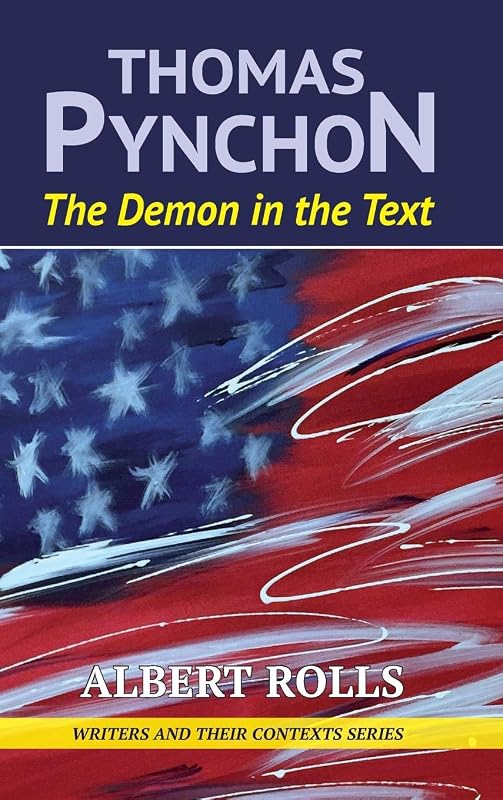
Thomas Pynchon: Demon in the Text (Writers and Their Contexts) by Albert Rolls

Thomas Pynchon: Demon in the Text (Writers and Their Contexts)

Albert Rolls
1 pages
Edward Everett Root
Apr 2019
Hardcover
All Non-Fiction WSBN
0
Readers
0
Reviews
0
Discussions
0
Quotes
This is a significant new and accessible work on the leading modern American novelist whose works - notably Gravity's Rainbow, which won the 1974 U.S. National Book Award for Fiction - remain mysterious to many, just as his life remains reclusive. Pynchon's fiction and non-fiction writings encompass a vast array of subject matter, genres and themes. His most recent novel is Bleeding Edge, published in September 2013. In Thomas Pynchon: The Demon in the Text, Albert Rolls shows that Pynchon's biography (or the traces of it that have emerged) can inform our understanding of Pynchon's fiction and that the fiction can inform our understanding of the life. The material Rolls uses to present his argument is often marginal and includes the available letters, many of which can be found in libraries; juvenilia, that which Pynchon wrote for his high-school newspaper as well as the unfinished "Minstrel Island"; the essay "Hallowe'en? Over Already?"; newspaper and magazine articles; book trailers and other promotional material; Paul Thomas Anderson's adaptation of Inherent Vice ; television shows, The Simpsons and The John Larroquette Show in particular; and the published non-fiction and fiction. Rolls analyzes this material to produce a reading of Pynchon that teases out the importance of the relationship among the public figure Thomas Pynchon, the private individual Tom Pynchon (who, Rolls demonstrates, resides in the text as a sort of Maxwell-Demon-like entity) , and those who read Pynchon and sometimes attempt to learn about his life. The result is a study of Pynchon as an idea rather than a life of Pynchon, although biographical details are discussed when they need to be, particularly in endnotes that often serve as essays themselves. Contents: Acknowledgements. Note on the text. Fictional Autobiographies and Autobiographical Fictions. A Dual Man (and Oeuvre) , Aimed Two Ways At Once: The Two Directions of Pynchon's Life and Thought. Considering the Enclave. Epilogue. Endnotes. Bibliography. Index.
Join the conversation

No discussions yet. Join BookLovers to start a discussion about this book!

No reviews yet. Join BookLovers to write the first review!

No quotes shared yet. Join BookLovers to share your favorite quotes!

Earn Points
Your voice matters. Every comment, review, and quote earns you reward points redeemable for Bitcoin.
Comment +5 pts Review +20 pts Quote +7 pts Upvote +1 pt
BookMatch Quiz
Find books similar to this one
About this book
Pages 1
Publisher Edward Everett Root
Published 2019
Readers 0