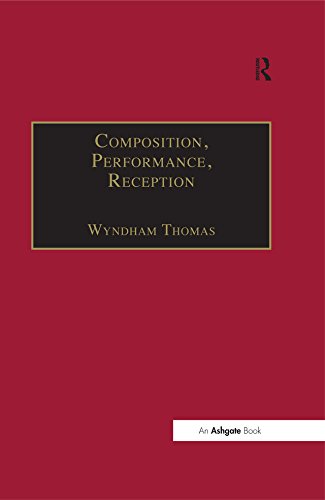
Composition, Performance, Reception: Studies in the Creative Process in Music by Wyndham Thomas

Composition, Performance, Reception: Studies in the Creative Process in Music

Wyndham Thomas
200 pages
Routledge
Oct 1998
1st Edition
Arts & Photography WSBN
0
Readers
0
Reviews
0
Discussions
0
Quotes
Composers, performers, listeners, critics and theorists all play vital roles in the creation of music culture; yet often each group can appear to hold widely divergent views of a musical work's aims and effects. As the title indicates, this book examines the parts played by these groups and the interaction between them. In the first of eleven essays, Robert Saxton discusses the difficulty in pin-pointing the moment of inspiration for a new composition; while Raymond Warren looks at the problems facing operatic performers, including those that arise when interpretations are suggested by the libretto but not in the music. The changing perception of the composer's art from the 14th century to the present day is charted by Wyndham Thomas, in particular attitudes towards arrangement. Two quite different views of the performer's responsibility in communicating the composer's intentions are taken by Charles Rosen and Susan Bradshaw, the latter arguing for the need to bridge the gap between theoretical and practical analysis of a work; and in two fascinating case studies, Eric Clarke and Jennifer Davidson highlight the ways in which attention to movements of the body in performance can reveal aspects of musical structure. The reception of music is tackled from a variety of perspectives in the book. In his assessment of audience reaction to Jonathan Harvey'sThe Riot Adrian Beaumont concludes that our response is influenced by a complex web of expectations and previous musical experience. The influence of record sleeves in also determining a listener's response to music is discussed by Nicholas Cook; while Stephen Walsh and Adrian Thomas explore two milieux of critical reception - the first to the music of Stravinsky, and the second to works composed during the social-realist period in Poland. On a more personal level, Bojan Bujic's essay forms a fitting counterpart to Saxton's in his attempt to locate the ways in which we experience a new musica
Join the conversation

No discussions yet. Join BookLovers to start a discussion about this book!

No reviews yet. Join BookLovers to write the first review!

No quotes shared yet. Join BookLovers to share your favorite quotes!

Earn Points
Your voice matters. Every comment, review, and quote earns you reward points redeemable for Bitcoin.
Comment +5 pts Review +20 pts Quote +7 pts Upvote +1 pt
BookMatch Quiz
Find books similar to this one
About this book
Pages 200
Publisher Routledge
Published 1998
Readers 0