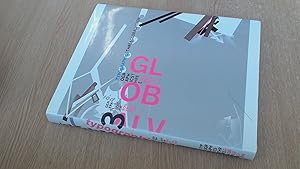
Data Association for Multi-Object Visual Tracking (Synthesis Lectures on Computer Vision) by Margrit Betke

Data Association for Multi-Object Visual Tracking (Synthesis Lectures on Computer Vision)

Margrit Betke
124 pages
Springer
Oct 2016
Paperback
Computers & Internet WSBN
0
Readers
0
Reviews
0
Discussions
0
Quotes
In the human quest for scientific knowledge, empirical evidence is collected by visual perception. Tracking with computer vision takes on the important role to reveal complex patterns of motion that exist in the world we live in. Multi-object tracking algorithms provide new information on how groups and individual group members move through three-dimensional space. They enable us to study in depth the relationships between individuals in moving groups. These may be interactions of pedestrians on a crowded sidewalk, living cells under a microscope, or bats emerging in large numbers from a cave. Being able to track pedestrians is important for urban planning; analysis of cell interactions supports research on biomaterial design; and the study of bat and bird flight can guide the engineering of aircraft. We were inspired by this multitude of applications to consider the crucial component needed to advance a single-object tracking system to a multi-object tracking system - data association.Data association in the most general sense is the process of matching information about newly observed objects with information that was previously observed about them. This information may be about their identities, positions, or trajectories. Algorithms for data association search for matches that optimize certain match criteria and are subject to physical conditions. They can therefore be formulated as solving a "constrained optimization problem" - the problem of optimizing an objective function of some variables in the presence of constraints on these variables. As such, data association methods have a strong mathematical grounding and are valuable general tools for computer vision researchers.This book serves as a tutorial on data association methods, intended for both students and experts in computer vision. We describe the basic research problems, review the current state of the art, and present some recently developed approaches. The book covers multi-object tracking in two and three dimensions. We consider two imaging scenarios involving either single cameras or multiple cameras with overlapping fields of view, and requiring across-time and across-view data association methods. In addition to methods that match new measurements to already established tracks, we describe methods that match trajectory segments, also called tracklets. The book presents a principled application of data association to solve two interesting tasks: first, analyzing the movements of groups of free-flying animals and second, reconstructing the movements of groups of pedestrians. We conclude by discussing exciting directions for future research.
Join the conversation

No discussions yet. Join BookLovers to start a discussion about this book!

No reviews yet. Join BookLovers to write the first review!

No quotes shared yet. Join BookLovers to share your favorite quotes!

Earn Points
Your voice matters. Every comment, review, and quote earns you reward points redeemable for Bitcoin.
Comment +5 pts Review +20 pts Quote +7 pts Upvote +1 pt
BookMatch Quiz
Find books similar to this one
About this book
Pages 124
Publisher Springer
Published 2016
Readers 0