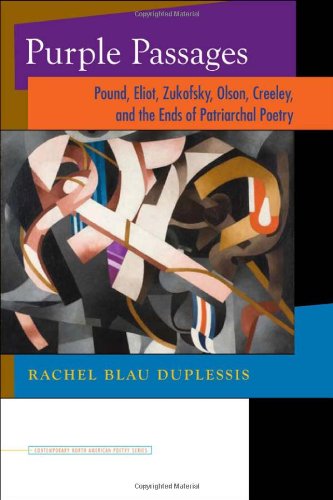
What is patriarchal poetry? How can it be both attractive and tempting and yet be so hegemonic that it is invisible? How does it combine various mixes of masculinity, femininity, effeminacy, and eroticism? At once passionate and dispassionate, Rachel Blau DuPlessis meticulously outlines key moments of choice and debate about masculinity among writers as disparate as Ezra Pound, T. S. Eliot, Louis Zukofsky, Charles Olson, Robert Creeley, and Allen Ginsberg, choices that construct consequential models for institutions of poetic practice. As DuPlessis writes, “There are no genderless subjects in any relationship structuring literary culture: not in production, dissemination, or reception; not in objects, discourses, or practices; not in reading experiences or in interpretations.