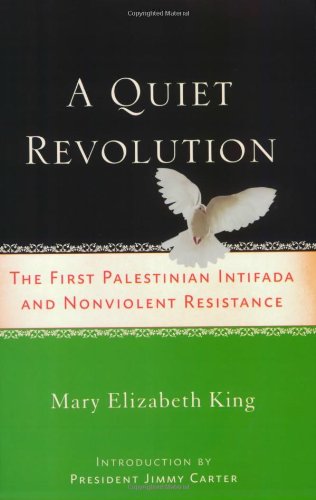
In A Quiet Revolution, renowned civil rights activist Mary Elizabeth King questions the prevailing wisdom that the first Palestinian Intifada was defined by violence. She argues that initially, the uprising was characterized by a massive nonviolent social mobilization, rooted in popular committees often steered by women. These committees adopted strategies that began to lead to political results — among them the beginnings of a negotiated settlement. King traces the tragic movement away from peaceful protest following the killing of four Palestinian laborers in Gaza, and charts the PLOs increasing contempt for nonviolent struggle. She details the complicity of the media in this escalation of violence — TV crews would not cover peaceful protests, but Palestinian boys throwing rocks at Israeli soldiers would attract foreign cameras.