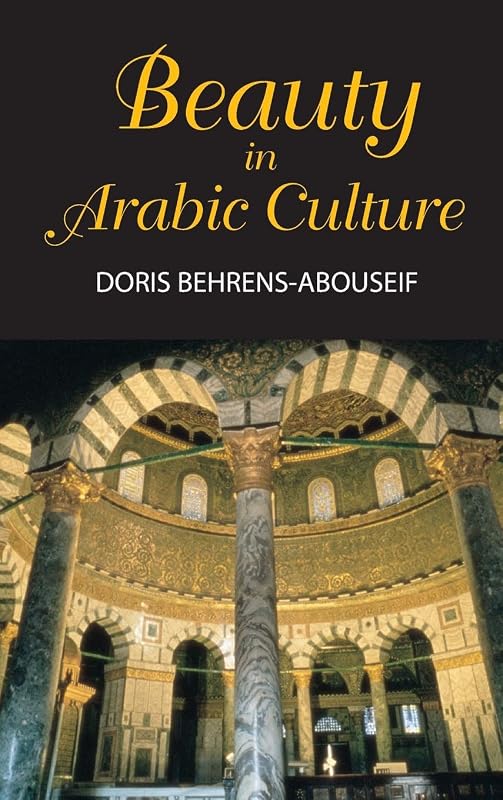
Beauty in Arabic Culture (Princeton the Middle East) by Doris Behrens-Abouseif

Beauty in Arabic Culture (Princeton the Middle East)

Doris Behrens-Abouseif
228 pages
Markus Wiener Publishers
Nov 2019
Hardcover
Psychology & Philosophy WSBN
0
Readers
0
Reviews
0
Discussions
0
Quotes
Arabic Islamic thought allowed the development of autonomous norms of beauty that were independent of moral or religious criteria. The artistic work was viewed separately from the divine scheme and was free of metaphysical associations.Beauty, however, had a significant place in religious thought. The Arab-Muslim tradition views the beauty of the universe, emphasized in the Koran, and the literary superiority of the Koranic text itself as compelling evidence for the divine hand. Under the influence of Greek thought, philosophers, sufis, and theologians dealt with the beauty-love relationship as the basic factor in the motion of the universe. Sufi worship is based on passion for God's beauty, which is manifest in the human image.Having created a huge empire on the territory of the great ancient civilizations, the Arab conquerors saw themselves as the heirs of these cultures and acted accordingly as great patrons of the arts. The sponsorship of the arts, which bestowed a brilliance on the monarchs, was viewed as beneficial to the image of the Muslim community when facing its Christian antagonists.Poetry, calligraphy, music, architecture, and the decorative arts flourished in this system of sponsorship. It was Muslim orthodoxy itself, based on the Prophet's distance to the poets, that let art go its profane way. Sufi poets adopted the vocabulary of erotic and bacchic poetry to address God, and craftsmen applied the same architectural and decorative idiom to both religious and profane monuments. In music, virtuosity was associated with diabolic rather than divine inspiration. Music, poetry, and wine belonged to the same hedonistic experience.Doris Behrens-Abouseif's book provides a panorama of the concepts of beauty in classical and post-classical Arabic culture through the 15th century, drawing on Arabic texts from philosophy, theology, mysticism, poetry, and literary criticism as well as historiographic sources and tales from the Thousand and One Nights. Behrens-Abouseif elucidates the ways in which beauty was measured by the degree of pleasure it elicited in the recipient, an attitude that anticipates modernity in both East and West.
Join the conversation

No discussions yet. Join BookLovers to start a discussion about this book!

No reviews yet. Join BookLovers to write the first review!

No quotes shared yet. Join BookLovers to share your favorite quotes!

Earn Points
Your voice matters. Every comment, review, and quote earns you reward points redeemable for Bitcoin.
Comment +5 pts Review +20 pts Quote +7 pts Upvote +1 pt
BookMatch Quiz
Find books similar to this one
About this book
Pages 228
Publisher Markus Wiener Publis...
Published 2019
Readers 0