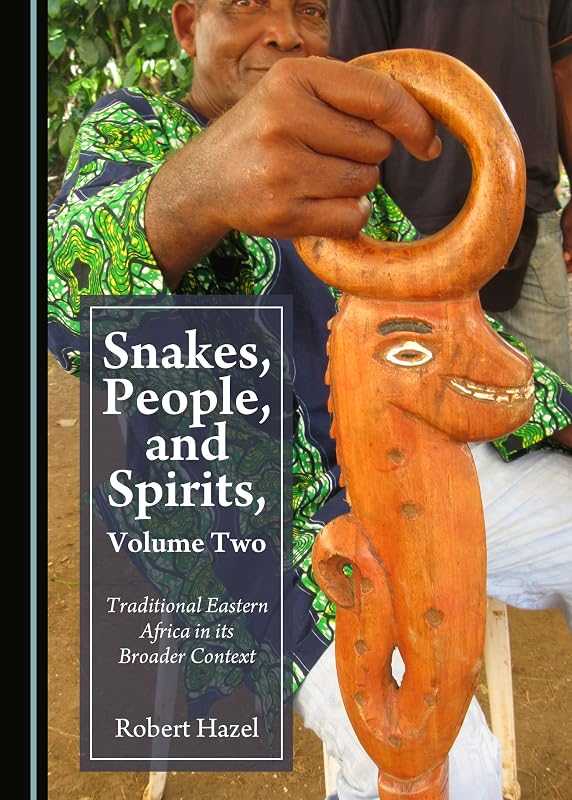
This two-volume publication offers an in-depth analysis of ophidian symbolism in Eastern Africa, while setting the topic within its regional and historical context: namely, with regards to the rest of Africa, ancient Egypt and Mesopotamia, the Greek world, ancient Palestine, Arabia, India, and medieval and pre-Christian Europe. Through the ages, most of those areas have connected with Eastern Africa in a broad sense, where ophidian symbolism was as "rampant" and far-reaching, if not more so, as anywhere else on the continent, and perhaps in past civilisations. Much as in the wider context, snakes were held to be long-lived, closely related to holes, caverns, trees, and water, life and death, and credited with a liking for milk. Even though ophidian symbolism has always been developed out of the outstanding biological and ethological features of snakes, the process of symbolisation, which plays a crucial role in the elaboration of cultural systems and the shaping of human experience, was inevitably at work. This second volume focuses on southern Abyssinia, an area of Eastern Africa latu senso where the connection between snakes and paramount religious leaders was especially far-reaching. Their clans were said to be the outcome of sexual encounters between a young woman and an ophidian. These leaders bred and fed snakes. Some of them buried dead snakes in their compounds. Their curse was likened to the bite of a deadly serpent. This volume is devoted to a few communities of southern Abyssinia, notably the Oromo, an important group that has fascinated European travellers, missionaries, and social science specialists over a period of 150 years. The rich Oromo ethnographic record lends itself to full-circle analysis. This volume represents a significant contribution to the study of the mysterious "snake priests" of the Oromo, Hoor, Konso, and Burji peoples. In Eastern Africa, the meanings attributed to snakes were multifaceted and paradoxical. Overall, the two volumes of this publication show that African snake symbolism broadly echoed the diverse representations of ancient civilisations. The widely acknowledged assimilation of snakes to death and Evil is therefore unrepresentative, both historically and culturally.