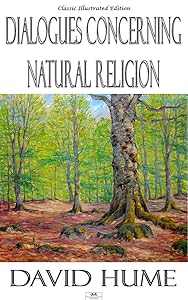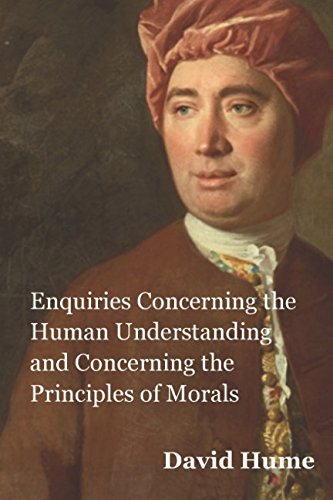
Enquiries Concerning the Human Understanding and Concerning the Principles of Morals by David Hume

Enquiries Concerning the Human Understanding and Concerning the Principles of Morals

David Hume
233 pages
Jan 2017
Paperback
Psychology & Philosophy WSBN
0
Readers
0
Reviews
0
Discussions
0
Quotes
An Enquiry Concerning the Principles of Morals is a book by Scottish enlightenment philosopher David Hume. In it, Hume argues (among other things) that the foundations of morals lie with sentiment, not reason. An Enquiry Concerning the Principles of Morals is the enquiry subsequent to the Enquiry Concerning Human Understanding. Thus, it is often referred to as "the second Enquiry". It was originally published in 1751, three years after the first Enquiry. Hume first discusses ethics in A Treatise of Human Nature (in Book 3 - "Of Morals") . He later extracted and expounded upon the ideas he proposed there in his second Enquiry. In his short autobiographical work, My Own Life (1776) , Hume states that his second Enquiry is "of all my writings, historical, philosophical, or literary, incomparably the best." Hume's approach in the second Enquiry is largely an empirical one. Instead of beginning his moral inquiry with questions of how morality ought to operate, he purports to investigate primarily how we actually do make moral judgments. As Hume puts it: As this is a question of fact, not of abstract science, we can only expect success, by following the experimental method, and deducing general maxims from a comparison of particular instances. (EPM, §1, ¶10) Furthermore, Hume purports to provide a naturalistic account of morality, at least to the extent that it is something that is common among the human species. He writes: The final sentence, it is probable, which pronounces characters and actions amiable or odious, praise-worthy or blameable... depends on some internal sense or feeling, which nature has made universal in the whole species. (EPM, §1, ¶8) But, whether in the end Hume purports to provide a normative ethical theory, rather than a merely descriptive theory of moral psychology, is a contentious issue among Hume scholars.
Join the conversation

No discussions yet. Join BookLovers to start a discussion about this book!

No reviews yet. Join BookLovers to write the first review!

No quotes shared yet. Join BookLovers to share your favorite quotes!

Earn Points
Your voice matters. Every comment, review, and quote earns you reward points redeemable for Bitcoin.
Comment +5 pts Review +20 pts Quote +7 pts Upvote +1 pt
BookMatch Quiz
Find books similar to this one
About this book
Pages 233
Published 2017
Readers 0