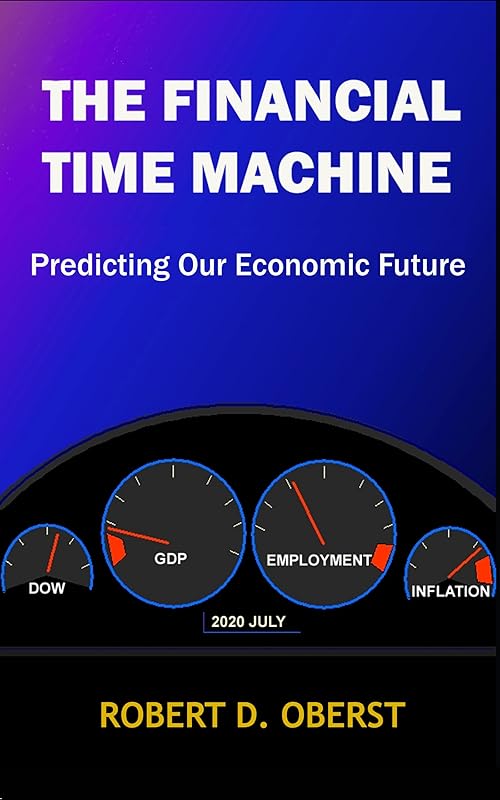
The Financial Time Machine: Predicting Our Economic Future by Robert D. Oberst

The Financial Time Machine: Predicting Our Economic Future

Robert D. Oberst
300 pages
Global Future Press
Aug 2013
Paperback
Business & Investing WSBN
0
Readers
0
Reviews
0
Discussions
0
Quotes
When a large generation such as the War Boom Baby generation is at its peak financially, we will have a long-term economic expansion. Shortly after that generation starts to downsize, we will have a long-term contraction like the Great Recession that this book has predicted would not soon end. These generational ebbs and flows set a series of waves that have passed over the economy for decades generating tremendous financial force. The Boomers were the largest generation in the history of the United States, for which the book predicted our longest expansion lasting 25 years from 1983 through 2007. During this period, the Boomers injected an unprecedented amount of economic stimulus into the economy. Granted there were a couple of recessions, but these were relatively mild and the period from 1991 until 2001 was the longest without a recession in U.S. history. There were numerous reasons for the Great Recession, but at its core was the fact that this, the largest generation ever was starting to downsize and withdraw their record level of generational economic stimulus from the economy. They were buying less, particularly fewer, larger homes, thereby bursting the housing bubble that precipitated the Great Recession. Generational waves do not directly cause a serious recession or depression, but rather set the stage upon which the financial actors, such as investment banks and hedge funds perform according to the script of their time. [Take a journey upon the time machine at YouTube and see what it forecasts at youtube.com/watch?v=oqVXUCXaRM - All aboard!] If this theory is true, it should also apply to other past peak generations such as the Greatest generation who won World War II and even the peak generation that followed the Civil War. It turns out that these generations also spawned record breaking, long-term expansions. And, as they retired, we had the Great Depression in the 1930s and the economic malaise in the 1970s with four recessions in a mere 13 years. Thus far, the model built in 2001 has correctly predicted the course of the U.S. economy since then, and more importantly likely predicts our economic future and growth prospects. Interestingly, the time machine's principles also apply to most of the world's leading economies including China, Japan, Germany, France, the U.K, and Italy.
Join the conversation

No discussions yet. Join BookLovers to start a discussion about this book!

No reviews yet. Join BookLovers to write the first review!

No quotes shared yet. Join BookLovers to share your favorite quotes!

Earn Points
Your voice matters. Every comment, review, and quote earns you reward points redeemable for Bitcoin.
Comment +5 pts Review +20 pts Quote +7 pts Upvote +1 pt
BookMatch Quiz
Find books similar to this one
About this book
Pages 300
Publisher Global Future Press
Published 2013
Readers 0