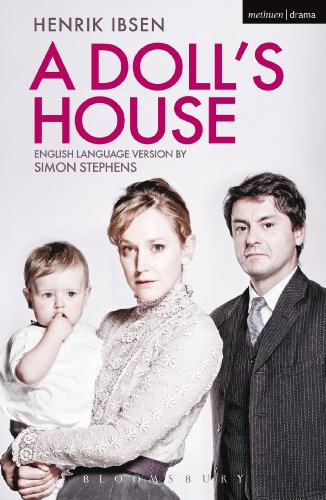
'I think I'm a human being before anything else. I don't care what other people say. I don't care what people write in books. I need to think for myself.' Henrik Ibsen's A Doll's House premiered in 1879 in Copenhagen, the second in a series of realist plays by Ibsen, and immediately provoked controversy with its apparently feminist message and exposure of the hypocrisy of Victorian middle-class marriage. In Ibsen's play, Nora Helmer has secretly (and deceptively) borrowed a large sum of money to pay for her husband, Torvald, to recover from illness on a sabbatical in Italy. Torvald's perception of Nora is of a silly, naive spendthrift, so it is only when the truth begins to emerge, and Torvald appreciates the initiative behind his wife, that unmendable cracks appear in their marriage.