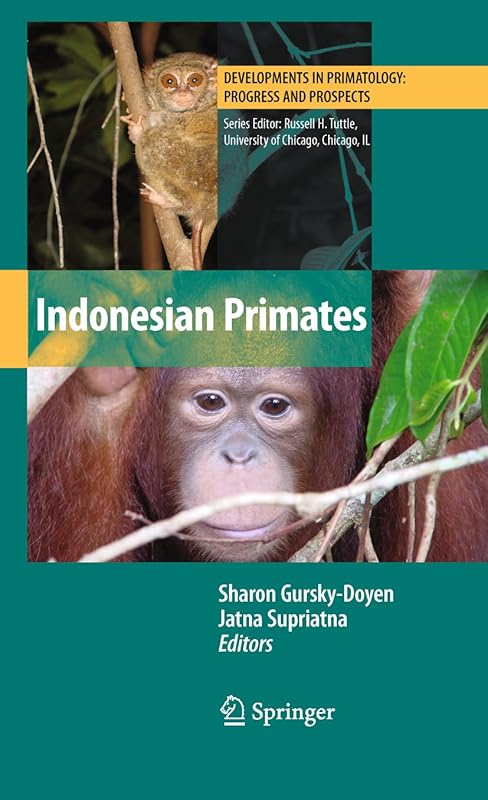
Indonesian Primates (Developments in Primatology: Progress and Prospects) by Sharon Gursky-Doyen

Indonesian Primates (Developments in Primatology: Progress and Prospects)

Sharon Gursky-Doyen
772 pages
Springer
Jan 2010
Hardcover
Science WSBN
0
Readers
0
Reviews
0
Discussions
0
Quotes
Indonesia possesses the second largest primate population in the world, with over 33 different primate species. Although Brazil possesses more primate species, Indonesia outranks it in terms of its diversity of primates, ranging from prosimians (slow lorises and tarsiers) , to a multitude of Old World Monkey species (macaques, langurs, proboscis moneys) to lesser apes (siamangs, gibbons) and great apes (orangutans) . The primates of Indonesia are distributed throughout the archipelago.Partly in response to the number of primates distributed throughout the Indonesian archipelago, Indonesia is classified as the home of two biodiversity hotspots (Wallacea and Sundaland) . In order to be classified as a hotspot, an area must have a large proportion of endemic species coupled with a high degree of threat including having lost more than 70% of its original habitat. Two areas within Indonesia meet these criteria. The tremendous diversity of primates in Indonesia, in conjunction with the conservation issues facing the primates of this region, created a need for this volume.
Join the conversation

No discussions yet. Join BookLovers to start a discussion about this book!

No reviews yet. Join BookLovers to write the first review!

No quotes shared yet. Join BookLovers to share your favorite quotes!

Earn Points
Your voice matters. Every comment, review, and quote earns you reward points redeemable for Bitcoin.
Comment +5 pts Review +20 pts Quote +7 pts Upvote +1 pt
BookMatch Quiz
Find books similar to this one
About this book
Pages 772
Publisher Springer
Published 2010
Readers 0