Publishers Weekly12/23/2013
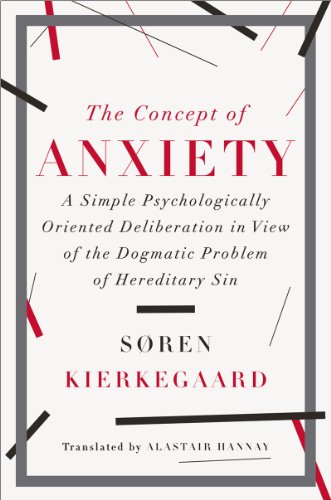
Originally published in 1844, at the same time as Philosophical Fragments, this treatise by Kierkegaard (1813–1855), newly translated by Kierkegaard scholar Hannay, explores anxiety as a necessary part of the human condition, which when embraced can lead to "freedom's actuality as the possibility of possibility." Anxiety results from humanity's unique ability to reflect on itself, and the nature of its own existence. Each living person is both an individual as well as a species, capable of reproducing others of its kind. This self-awareness, which each person discovers at a certain point, Kierkegaard claims, is the true "original sin," and can lead to fear, guilt, and many other disorders, stemming from the "overwhelming knowledge of good and evil.