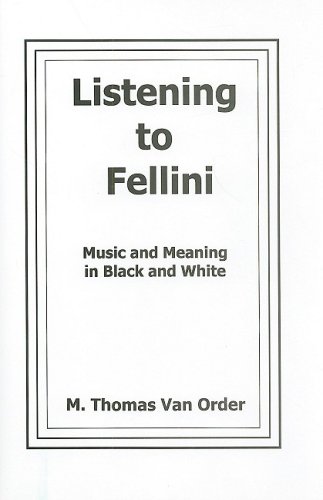
Listening to Fellini: Music and Meaning in Black and White (Fairleigh Dickinson University Press Series in Italian Studies) by M. Thomas Van Order

Listening to Fellini: Music and Meaning in Black and White (Fairleigh Dickinson University Press Series in Italian Studies)

M. Thomas Van Order
275 pages
UNKNO
Jan 2009
Hardcover
All Non-Fiction WSBN
0
Readers
0
Reviews
0
Discussions
0
Quotes
For decades scholarship on Federico Fellini has focused on the figure of the director himself, while formal analysis based on the craft of filmmaking has been largely ignored. Fellini spent countless hours in the studios of Cinecitta recording, mixing, and editing music, voices, and sound effects for his films, but his unique and often revolutionary uses of cinematic sound have never been systematically studied. This book reveals the singularly important role played by music in the construction of meaning in Fellini's black and white feature-length films, and presents a substantial re-reading of the seven films made during the most creative period of Fellini's artistic development: The White Sheik, I vitellini, La strada, Il bidone, The Nights if Cabiria, La dolce vita, and 8 1/2.The editing of music in Fellini's first films represents an entirely new approach to cinematic sound. The sophistication and complexity of Fellini's soundtracks far surpasses the neorealist models that are often assumed to form the practical foundation of Fellini's earliest works, and an analysis of the editing of music in these films reveals extraordinary innovation in the pairing of music and visual image. Although these films may often seem visually conventional, the soundtracks- characterized by abrupt cuts, comic synchronization with the visual image, unrealistic passages between nondiegetic and diegetic musical sources, and the coexistence of diegetic sources with nondiegetic musical accompaniment- undermine the verisimilitude of the projected image, facilitate aesthetic distance, and emphasize artifice at the expense of 'reality.' Functioning as an ironic, often dissonant counterpoint to the narrative structure of the visual images, the manifestly artificial editing of music in Fellini's films questions the verisimilitude of cinematic narration by revealing the interpenetratin of representation and reception, being and seeming, history and story, 'truth' and fiction.

No discussions yet. Join BookLovers to start a discussion about this book!

No reviews yet. Join BookLovers to write the first review!

No quotes shared yet. Join BookLovers to share your favorite quotes!