Mammals of Europe (Princeton Field Guides, 16)
David W. Macdonald
320 pages
Princeton University Press
Jan 2001
Paperback
Science
WSBN
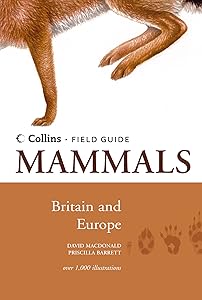
In the wilds of which one continent do Canadian beavers, white-tailed deer, raccoons, American mink, Algerian hedgehogs, Egyptian slit-faced bats, Chinese water deer, golden jackals, red-necked wallabies, and Barbary apes scamper or flutter about? Europe. This guide is the first to authoritatively describe all of the more than 200 mammals one might encounter in the Old World and the seas around it--also including more widespread creatures such as brown bears, badgers, bats, hedgehogs, wild boar, and a host of whales and dolphins.. The book features 64 color plates containing over 600 superbly detailed paintings of the animals themselves, sometimes with their young, and sketches of tracks, nests, holes, field signs, skulls and teeth. Many species appear in their characteristic gaits. The succinct yet unusually informative text is complemented by 236 black and white sketches and over 200 distribution maps. For each species, details on color, form, habitats, measurements, breeding, and behavior are given. A specific entry for every animal covers recognition, whether by sound, the marks left when feeding, or its tracks. A table on bats explains all variations in flight pattern, calls, and feeding times. An exhaustive list of calls made by whales and dolphins is also included.. Nature-lovers eyeing a real or imagined European vacation will discover in these pages that the Old World's mix of mammals, far from being old hat, is positively fascinating. Offering thorough information and first-rate color illustrations, this book sets the standard high.. Comprehensive field guide to the more than 200 mammals of Europe and the surrounding seas 64 color plates with more than 600 paintings of the animals and sketches of their tracks, nests, holes, field signs, skulls and teeth, and young Text provides information on color, form, habitat, size, breeding, and behavior, with specific entries for recognition by sound, tracks, or color variation Table on flight pattern, calls, and feeding times for all bats Over 200 distribution maps plus black-and-white illustrations