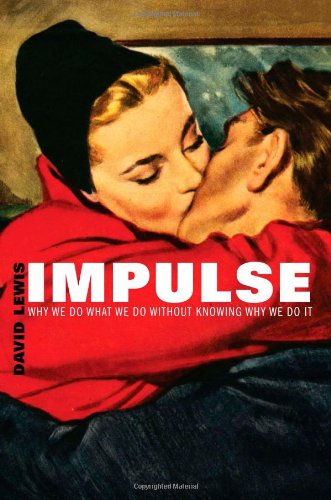
"It seemed like a good idea at the time" has been the limp excuse of many a person whose actions later became cause for regret. Although we see ourselves as rational beings, we are far more likely to act according to impulse than logic. Nor is this always a bad thing, David Lewis suggests. Impulse explores all the mystifying things people do despite knowing better, from blurting out indiscretions to falling for totally incompatible romantic partners. Informed by the latest research in neuropsychology, this eye-opening account explains why snap decisions so often govern--and occasionally enrich--our lives. Lewis investigates two kinds of thinking that occur in the brain: one slow and reflective, the other fast but prone to error. In ways we cannot control, our mental tracks switch from the first type to the second, resulting in impulsive actions.