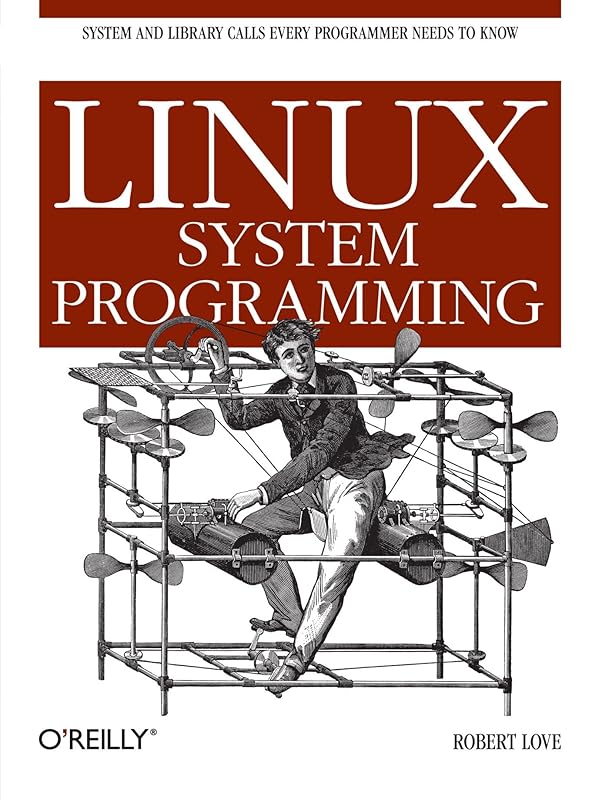
Linux System Programming: Talking Directly to the Kernel and C Library by Robert Love

Linux System Programming: Talking Directly to the Kernel and C Library

Robert Love
392 pages
O'Reilly Media
Sep 2007
1st Edition
Computers & Internet WSBN
0
Readers
0
Reviews
0
Discussions
0
Quotes
This book is about writing software that makes the most effective use of the system you're running on -- code that interfaces directly with the kernel and core system libraries, including the shell, text editor, compiler, debugger, core utilities, and system daemons. The majority of both Unix and Linux code is still written at the system level, and Linux System Programming focuses on everything above the kernel, where applications such as Apache, bash, cp, vim, Emacs, gcc, gdb, glibc, ls, mv, and X exist.. Written primarily for engineers looking to program (better) at the low level, this book is an ideal teaching tool for any programmer. Even with the trend toward high-level development, either through web software (such as PHP) or managed code (C#) , someone still has to write the PHP interpreter and the C# virtual machine. Linux System Programming gives you an understanding of core internals that makes for better code, no matter where it appears in the stack. Debugging high-level code often requires you to understand the system calls and kernel behavior of your operating system, too.. Key topics include:An overview of Linux, the kernel, the C library, and the C compilerReading from and writing to files, along with other basic file I/O operations, including how the Linux kernel implements and manages file I/OBuffer size management, including the Standard I/O libraryAdvanced I/O interfaces, memory mappings, and optimization techniquesThe family of system calls for basic process managementAdvanced process management, including real-time processesFile and directories-creating, moving, copying, deleting, and managing themMemory management -- interfaces for allocating memory, managing the memory youhave, and optimizing your memory accessSignals and their role on a Unix system, plus basic and advanced signal interfacesTime, sleeping, and clock management, starting with the basics and continuing through POSIX clocks and high resolution timersWith Linux System Programming, you will be able to take an in-depth look at Linux from both a theoretical and an applied perspective as you cover a wide range of programming topics.
Join the conversation

No discussions yet. Join BookLovers to start a discussion about this book!

No reviews yet. Join BookLovers to write the first review!

No quotes shared yet. Join BookLovers to share your favorite quotes!

Earn Points
Your voice matters. Every comment, review, and quote earns you reward points redeemable for Bitcoin.
Comment +5 pts Review +20 pts Quote +7 pts Upvote +1 pt
BookMatch Quiz
Find books similar to this one
About this book
Pages 392
Publisher O'Reilly Media
Published 2007
Readers 0