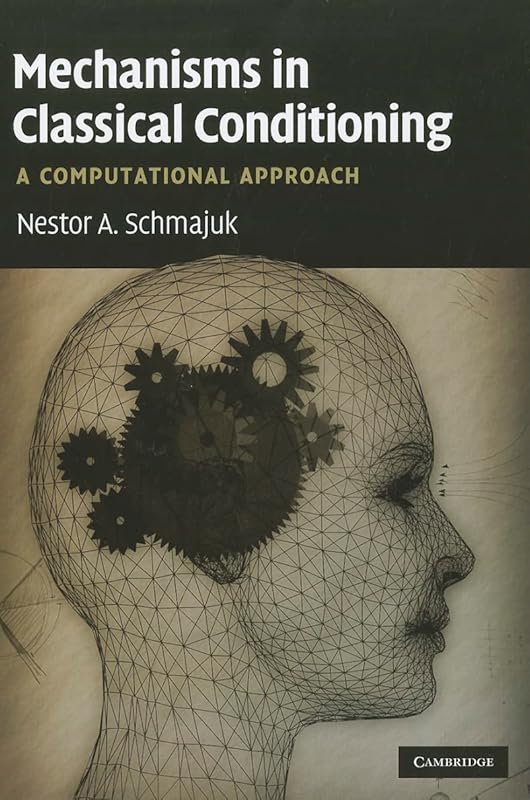
Mechanisms in Classical Conditioning: A Computational Approach by Nestor Schmajuk

Mechanisms in Classical Conditioning: A Computational Approach

Nestor Schmajuk
504 pages
Cambridge University Press
Mar 2010
1st Edition
Psychology & Philosophy WSBN
0
Readers
0
Reviews
0
Discussions
0
Quotes
What mechanisms are involved in enabling us to generate predictions of what will happen in the near future? Although we use associative mechanisms as the basis to predict future events, such as using cues from our surrounding environment, timing, attentional, and configural mechanisms are also needed to improve this function. Timing mechanisms allow us to determine when those events will take place. Attentional mechanisms ensure that we keep track of cues that are present when unexpected events occur and disregard cues present when everything happens according to our expectations. Configural mechanisms make it possible to combine separate cues into one signal that predicts an event different from that predicted individually by separate cues. Written for graduates and researchers in neuroscience, computer science, biomedical engineering and psychology, the author presents neural network models that incorporate these mechanisms and shows, through computer simulations, how they explain the multiple properties of associative learning.
Join the conversation

No discussions yet. Join BookLovers to start a discussion about this book!

No reviews yet. Join BookLovers to write the first review!

No quotes shared yet. Join BookLovers to share your favorite quotes!

Earn Points
Your voice matters. Every comment, review, and quote earns you reward points redeemable for Bitcoin.
Comment +5 pts Review +20 pts Quote +7 pts Upvote +1 pt
BookMatch Quiz
Find books similar to this one
About this book
Pages 504
Publisher Cambridge University...
Published 2010
Readers 0