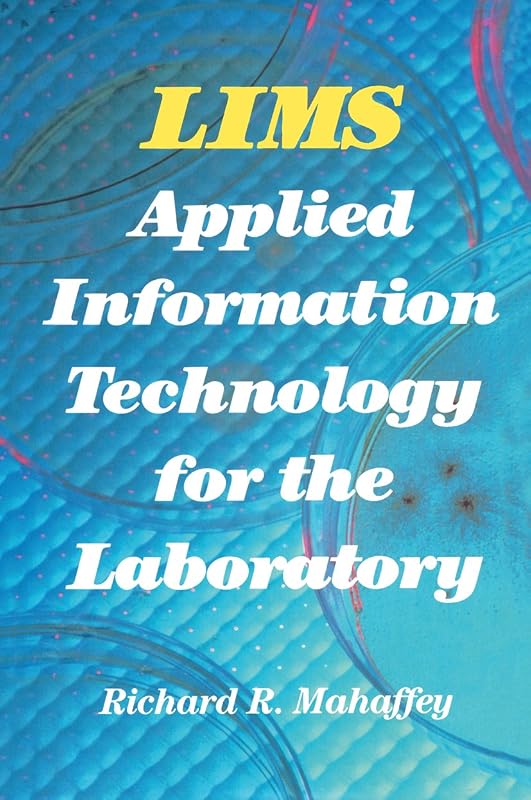
LIMS: Applied Information Technology for the Laboratory by Richard Mahaffey

LIMS: Applied Information Technology for the Laboratory

Richard Mahaffey
313 pages
Springer
Dec 2012
Hardcover
Computers & Internet WSBN
0
Readers
0
Reviews
0
Discussions
0
Quotes
Computing and information management technologies touch our lives in the environments where we live, play and, work. High tech is becoming the standard. Those of use who work in a laboratory environment are faced with an obvious challenge. How do we best apply these technol­ ogies to make money for our companies? The first level of deliverable benefits is achieved through task automation. The second level is ob­ tained by integrating the individual islands of automation. The third, or top level, of benefits is related to applying intelligence to computing applications. The use of computing technology, at level one, to automate lab pro­ cedures, methods, and instruments has been profitable for many years. We can easily find yearly returns in the range of 10-50% for investments at this level. For level two, the integration of some applications has evolved and has led to data management systems and local area net­ working in the lab environment. Investment paybacks at level two are substantially higher, in the range of 200-400%. Examples of applications at the top level, that of intelligent systems and applications, are few and far between. And what about the payback for investments at this level? With such limited experience at level three, we can only estimate the benefits. But again, they appear to be much higher, in the range of 2000- 4000%.
Join the conversation

No discussions yet. Join BookLovers to start a discussion about this book!

No reviews yet. Join BookLovers to write the first review!

No quotes shared yet. Join BookLovers to share your favorite quotes!

Earn Points
Your voice matters. Every comment, review, and quote earns you reward points redeemable for Bitcoin.
Comment +5 pts Review +20 pts Quote +7 pts Upvote +1 pt
BookMatch Quiz
Find books similar to this one
About this book
Pages 313
Publisher Springer
Published 2012
Readers 0