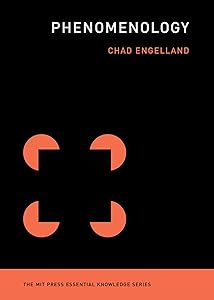
Ostension: Word Learning and the Embodied Mind by Chad Engelland

Ostension: Word Learning and the Embodied Mind

Chad Engelland
305 pages
Mit Pr
Jan 1656
Hardcover
Psychology & Philosophy WSBN
0
Readers
0
Reviews
0
Discussions
0
Quotes
An examination of the role of ostension—the bodily manifestation of intention—-in word learning, and an investigation of the philosophical puzzles it poses.Ostension is bodily movement that manifests our engagement with things, whether we wish it to or not. Gestures, glances, facial expressions: all betray our interest in something. Ostension enables our first word learning, providing infants with a prelinguistic way to grasp the meaning of words. Ostension is philosophically puzzling; it cuts across domains seemingly unbridgeable—public–private, inner–outer, mind–body. In this book, Chad Engelland offers a philosophical investigation of ostension and its role in word learning by infants.Engelland discusses ostension (distinguishing it from ostensive definition) in contemporary philosophy, examining accounts by Quine, Davidson, and Gadamer, and he explores relevant empirical findings in psychology, evolutionary anthropology, and neuroscience. He offers original studies of four representative historical thinkers whose work enriches the understanding of ostension: Wittgenstein, Merleau-Ponty, Augustine, and Aristotle. And, building on these philosophical and empirical foundations, Engelland offers a meticulous analysis of the philosophical issues raised by ostension. He examines the phenomenological problem of whether embodied intentions are manifest or inferred; the problem of what concept of mind allows ostensive cues to be intersubjectively available; the epistemological problem of how ostensive cues, notoriously ambiguous, can be correctly understood; and the metaphysical problem of the ultimate status of the key terms in his argument: animate movement, language, and mind. Finally, he argues for the centrality of manifestation in philosophy. Taking ostension seriously, he proposes, has far-reaching implications for thinking about language and the practice of philosophy.
Join the conversation

No discussions yet. Join BookLovers to start a discussion about this book!

No reviews yet. Join BookLovers to write the first review!

No quotes shared yet. Join BookLovers to share your favorite quotes!

Earn Points
Your voice matters. Every comment, review, and quote earns you reward points redeemable for Bitcoin.
Comment +5 pts Review +20 pts Quote +7 pts Upvote +1 pt
BookMatch Quiz
Find books similar to this one
About this book
Pages 305
Publisher Mit Pr
Published 1656
Readers 0