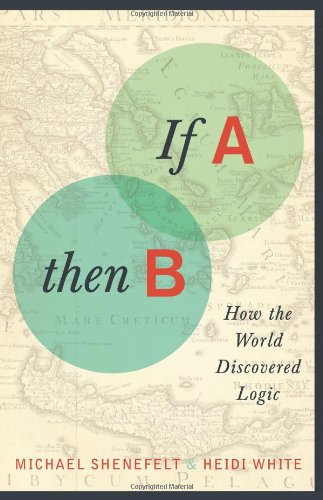
While logical principles seem timeless, placeless, and eternal, their discovery is a story of personal accidents, political tragedies, and broad social change. If A, Then B begins with logic's emergence twenty-three centuries ago and tracks its expansion as a discipline ever since. It explores where our sense of logic comes from and what it really is a sense of. It also explains what drove human beings to start studying logic in the first place.Logic is more than the work of logicians alone. Its discoveries have survived only because logicians have also been able to find a willing audience, and audiences are a consequence of social forces affecting large numbers of people, quite apart from individual will. This study therefore treats politics, economics, technology, and geography as fundamental factors in generating an audience for logic--grounding the discipline's abstract principles in a compelling material narrative.