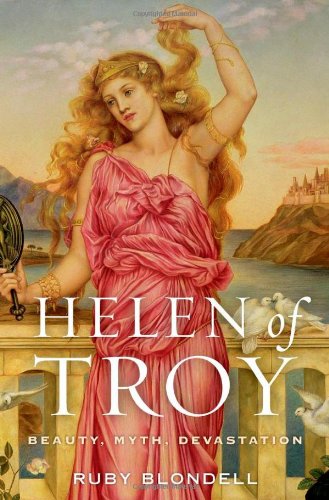
The story of Helen of Troy has its origins in ancient Greek epic and didactic poetry, more than 2500 years ago, but it remains one of the world's most galvanizing myths about the destructive power of beauty. Much like the ancient Greeks, our own relationship to female beauty is deeply ambivalent, fraught with both desire and danger. We worship and fear it, advertise it everywhere yet try desperately to control and contain it. No other myth evocatively captures this ambivalence better than that of Helen, daughter of Zeus and Leda, and wife of the Spartan leader Menelaus. Her elopement with (or abduction by) the Trojan prince Paris "launched a thousand ships" and started the most famous war in antiquity. For ancient Greek poets and philosophers, the Helen myth provided a means to explore the paradoxical nature of female beauty, which is at once an awe-inspiring, supremely desirable gift from the gods, essential to the perpetuation of a man's name through reproduction, yet also grants women terrifying power over men, posing a threat inseparable from its allure.