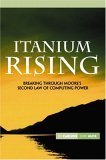
Itanium Rising: Breaking Through Moore's Second Law of Computing Power by Jim Carlson

Itanium Rising: Breaking Through Moore's Second Law of Computing Power

Jim Carlson
300 pages
Prentice Hall
Jan 2002
Paperback
Computers & Internet WSBN
0
Readers
0
Reviews
0
Discussions
0
Quotes
This book covers the development and application of Itanium. It describes why the revolutionary leap forward in processing power can help CEO's achieve their company's vision. It also discusses the implication of these changes to a company's IT infrastructure. The book touches on issues involving how to move away from the desktop model of computing into implementing a system that best makes use of the IPF. The final section of the book discusses the future of the IPF and the technological changes resulting from it. This will prove to be a helpful guide and forecaster. Moore's Law states that the number of transistors in computer chips, which directly affects how fast a computer can process information, will double every eighteen months. However, computing speed has been held back by Moore's lesser-known second more transistors added do not necessarily mean that performance will double every 18 months. Most IT environments today rely on RISC based machines which have been increasing performance over the last several years by adding complexity to the chip to create "superscalar, out-of-order execution engines". While these have improvements have continued to increase system power year after year, there are now indications that we cannot depend on RISC to give the same benefits into the future.
Join the conversation

No discussions yet. Join BookLovers to start a discussion about this book!

No reviews yet. Join BookLovers to write the first review!

No quotes shared yet. Join BookLovers to share your favorite quotes!

Earn Points
Your voice matters. Every comment, review, and quote earns you reward points redeemable for Bitcoin.
Comment +5 pts Review +20 pts Quote +7 pts Upvote +1 pt
BookMatch Quiz
Find books similar to this one
About this book
Pages 300
Publisher Prentice Hall
Published 2002
Readers 0